Articles
Advantages of bolted steel frames over concrete and welded frames
Build quality, speed, earthquake and fire safety, corrosion and cost: a technical comparison of bolted frames with concrete and welded ones.
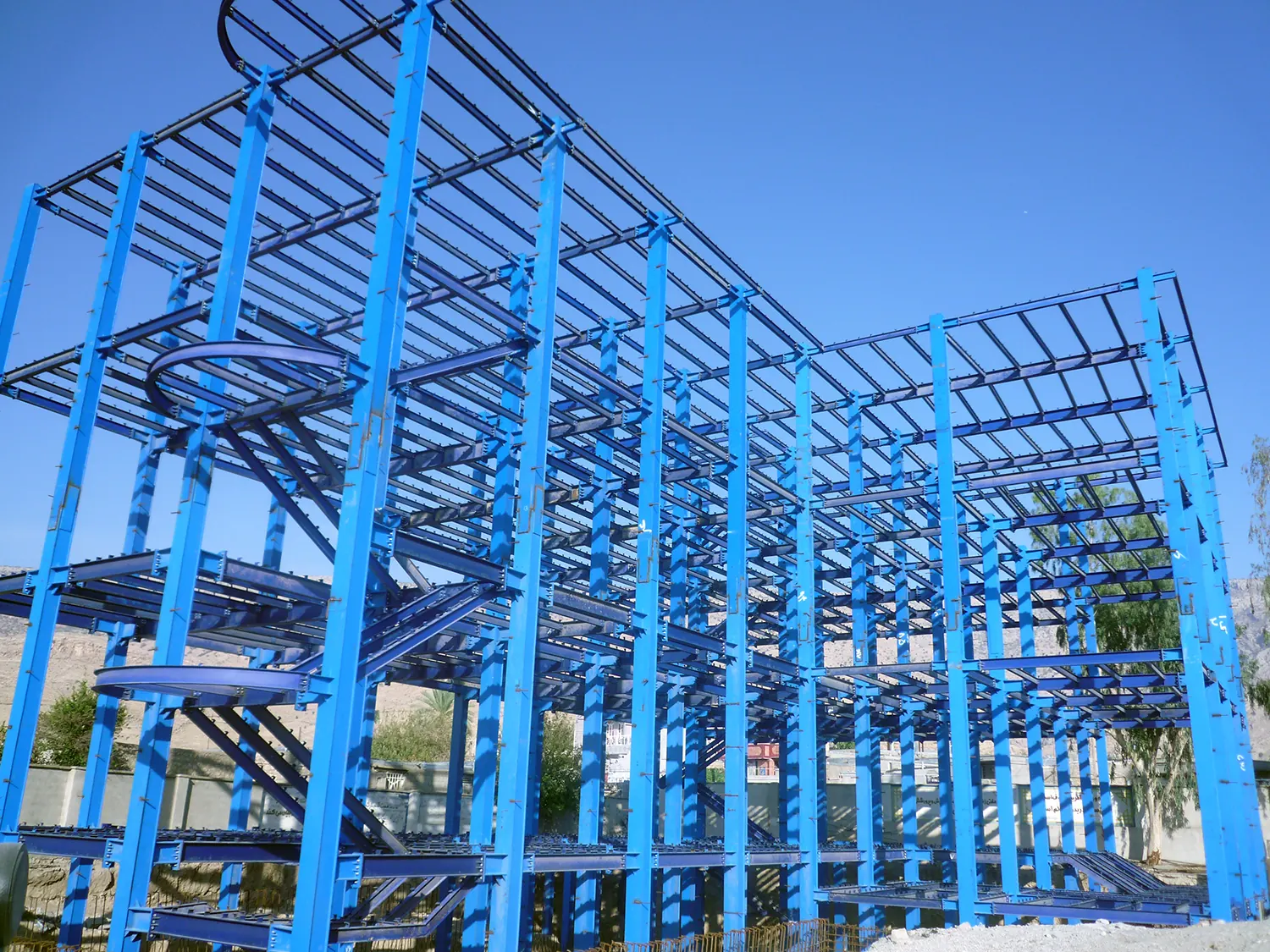
Buildings with bolted steel frames are among the recent advances in construction engineering. This article reviews the advantages of the method over concrete and welded frames.
Build quality
All fabrication takes place in the factory, away from damaging weather, and welding is done by industrial machines; in a welded frame, welding is done on site, with portable machines and changing weather.
Speed of fabrication and erection
Because every part arrives ready, erection is much faster than with a welded or concrete structure; where time or access is limited, this advantage is decisive.
Safety and stability
Higher build quality and the strength-to-weight ratio of steel make a bolted frame more stable against lateral loads and earthquakes, and suited to large shed spans and tall buildings.
Cost and material waste
Designers have more freedom to use lighter sections with bolted connections, which reduces waste and construction cost. The initial cost of a concrete frame may look lower, but once execution time, formwork and structural weight are counted, the picture changes.
Resistance to heat and corrosion
In a fire a bolted connection resists longer and collapse is less likely. Factory fabrication allows sandblasting, wire-brushing and special paints, which reduces corrosion.
Weight, usable space and recycling
A steel structure is lighter than a concrete one, and slimmer beams and columns give more usable space. Steel is produced uniformly to standards and can be recycled at the end of a building’s life.